
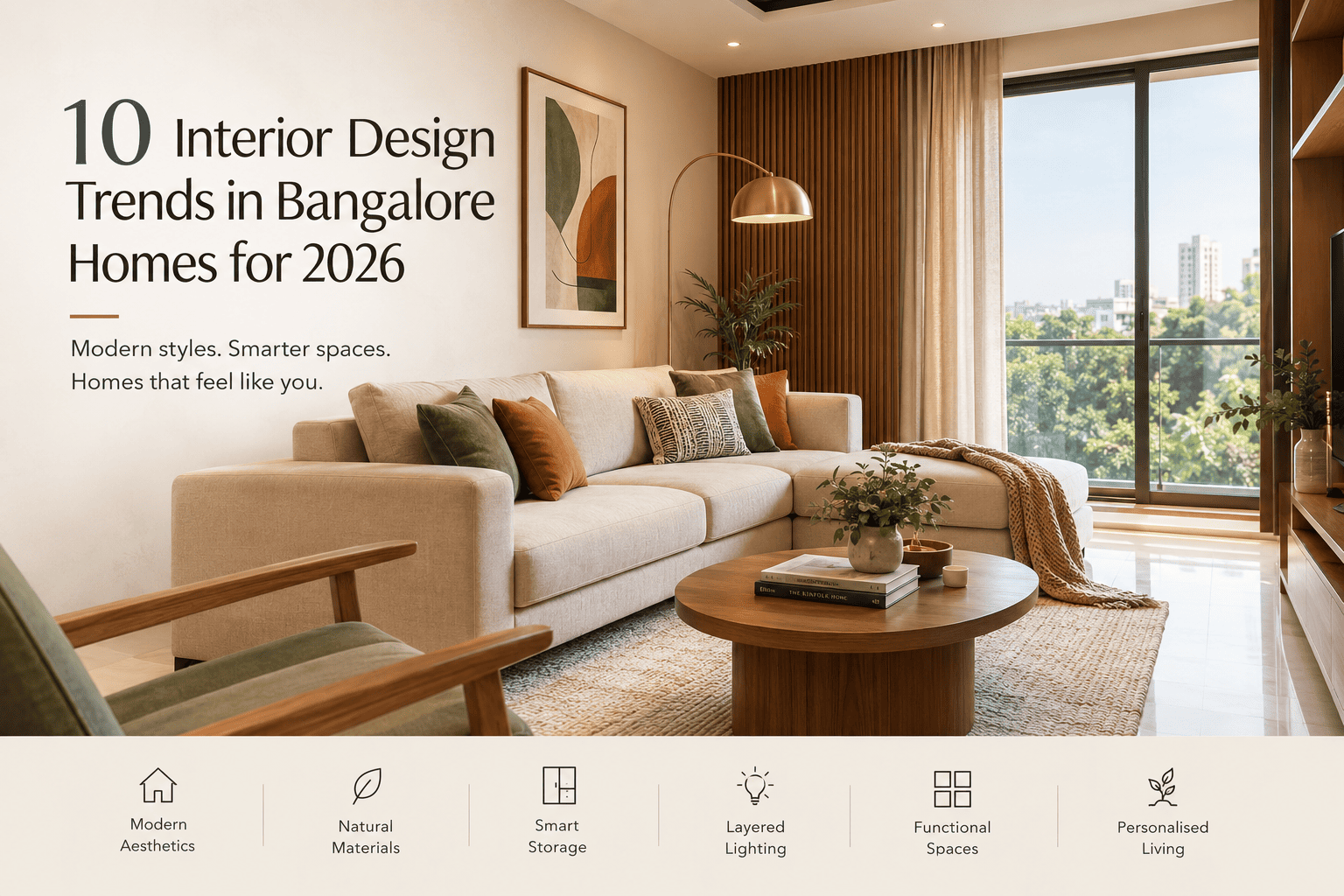
Bangalore homes are changing. Homeowners today are not only looking for interiors that are only beautiful but also practical, comfortable, easy to maintain and suited to the way they actually live. The best interior design trends for 2026 are therefore not simply about following what is fashionable. They are about creating homes that continue to work well years after the project is completed.
From compact apartments in busy neighborhoods to spacious villas on the outskirts of the city, interior design in Bangalore is moving towards a more thoughtful approach. Clean layouts, smart storage, natural materials, multi-functional furniture and personalized spaces are becoming increasingly important.
Here are 10 interior design trends in Bangalore worth considering in 2026:
1. Warm Minimalism Is Replacing Cold, Basic Minimalism
Minimalist interiors have been popular for several years, but the approach is becoming warmer and more personal.
Instead of completely white rooms and furniture with very sharp lines, homeowners are increasingly choosing neutral shades, warm wood finishes, textured fabrics and soft lighting.
This style is often described as warm minimalism. The idea is simple: keep the space uncluttered without making it feel empty.
For a Bangalore apartment, this can work particularly well because many urban homes need to balance limited floor space with storage and everyday functionality.
A warm minimalist living room could include:
- Neutral walls
- Wooden or wood-finish furniture
- Soft upholstery
- Subtle wall textures
- Layered lighting
- A few carefully selected decorative pieces
- Concealed storage
The result is a home that feels calm and sophisticated without appearing overly designed.
2. Multi-functional Spaces for Modern Bangalore Homes
Space is valuable, particularly in city apartments. As homes increasingly need to accommodate working, studying, relaxing and entertaining, multi-functional interiors are becoming more important.
A guest bedroom, for example, can also function as a home office. A dining area can incorporate additional storage. A living room can include a compact workstation without compromising its overall appearance.
Interior designers can achieve this through:
- Fold-able furniture
- Built-in storage
- Multipurpose cabinets
- Modular workstations
- Storage beds
- Extendable dining tables
- Sliding partitions
This trend is especially useful for apartment homeowners who want every square foot to serve a purpose.
Good interior design does not necessarily mean adding more furniture. It often means choosing the right furniture for the available space.
3. Smart Storage Is Becoming a Design Priority
One of the biggest challenges in home interiors is storage.
A beautiful home can quickly become difficult to maintain when there is not enough space for clothes, appliances, books, kitchen equipment, children’s belongings and everyday items.
In 2026, storage is increasingly being integrated into the design rather than treated as an afterthought.
Floor-to-ceiling wardrobes, hidden cabinets, under-bed storage, built-in TV units and cleverly designed kitchen storage can help homeowners keep their spaces organized.
For example, a simple TV wall can combine:
Entertainment + display + concealed storage
Similarly, a bedroom wardrobe can be designed around the homeowner’s actual storage requirements rather than using a standard configuration.
This is one reason customized home interiors can offer an advantage over simply buying individual furniture pieces.
4. Natural Materials and Earth-Inspired Interiors
Homeowners are showing greater interest in interiors that create a connection with nature.
Wood, stone-inspired finishes, cane, rattan, indoor plants, natural textures and earthy colors can make interiors feel warmer and more inviting.
Popular color directions include:
- Warm beige
- Terracotta
- Olive green
- Sand
- Taupe
- Soft brown
- Muted earthy tones
These shades can work particularly well with natural-looking wood finishes and warm lighting.
The goal is not to turn a home into a completely rustic space. Natural elements can also be incorporated into contemporary, modern or luxury interiors.
For Bangalore homes, where residents often want a comfortable retreat from a busy urban lifestyle, this approach can help create a more relaxed atmosphere.
5. Statement Lighting Instead of One-Source Lighting
Lighting is no longer considered just a functional requirement. It has become an important part of interior design. A single ceiling light may technically illuminate a room, but layered lighting can make the same space feel significantly more sophisticated.
A well-designed room may combine:
- Ambient lighting
- Task lighting
- Accent lighting
- Pendant lights
- Cove lighting
- Wall lights
- Under-cabinet lighting
For example, a kitchen may need bright task lighting around work areas, while a living room can benefit from softer ambient and accent lighting.
Pendant lights can also become a visual feature above a dining table or kitchen island. The important point is to design the lighting plan along with the interior layout instead of deciding on lighting at the very end of the project.
6. Personalized Interiors Over Copy-Paste Designs
One of the biggest shifts in interior design is the move away from identical-looking homes.
Social media provides endless inspiration, but copying a design exactly does not necessarily make it suitable for your home.
Your home’s layout, natural light, family requirements, storage needs, lifestyle and budget are different from someone else’s.
A family with young children may priorities durable finishes and easy-to-clean surfaces. A work-from-home professional may need a dedicated office. Someone who enjoys cooking may want a highly functional kitchen. A frequent traveler may want display areas for souvenirs and personal collections.
The best home interior design therefore begins with understanding the homeowner.
Your home should reflect how you live, not simply what is trending online.
7. Functional Modular Kitchens With Better Organization
The kitchen continues to be one of the most important areas of a Bangalore home. Modern homeowners want kitchens that look attractive but also make cooking and storage easier. Modular kitchen design allows different zones to be planned according to their functions.
These may include:
- Cooking zone
- Preparation area
- Washing zone
- Appliance storage
- Pantry storage
- Crockery storage
- Waste management
Drawer systems, tall units, corner storage, pull-outs and organized cabinet interiors can make a significant difference to everyday usability.
The external appearance matters too. Handle-less cabinets, wood finishes, neutral colors, textured laminates and glass elements can create a contemporary look while maintaining functionality.
A successful modular kitchen should therefore balance aesthetics, ergonomics, storage and maintenance.
8. Dedicated Work-From-Home and Study Corners
Working from home has changed how people think about residential spaces.
Not every home requires a separate office room. However, having a dedicated work or study zone can improve organization and help separate professional or academic activities from leisure.
A compact workstation can be incorporated into:
- A bedroom
- Living room
- Passage
- Guest room
- Balcony area, where appropriate
Built-in desks with overhead storage can be particularly useful in apartments.
For children’s rooms, study areas can combine a desk, bookshelves and closed storage while keeping enough open space for movement.
The key is to design these areas according to the user’s height, lighting needs, equipment and daily routine.
9. Flexible Spaces With Partitions
Open-plan interiors remain popular, but completely open spaces are not always practical. Flexible partitions provide a middle ground. Glass partitions, wooden screens, sliding doors, fluted panels and decorative partitions can visually divide spaces without making the home feel closed.
For example, a partition can separate the living and dining areas while maintaining visual continuity.
A glass partition can create a home office without completely isolating it.
This approach is particularly useful when homeowners want flexibility. The same room can serve different purposes at different times of the day.
10. Sustainable and Long-Lasting Design Choices
Sustainability in interior design does not always mean choosing expensive or highly specialized materials. It can also mean making thoughtful decisions that reduce unnecessary replacement and waste.
Durable materials, timeless layouts, repairable furniture, efficient lighting and long-lasting finishes can all contribute to a more sustainable home.
Instead of designing around a trend that may look dated within a few years, homeowners can choose a timeless base and introduce changing trends through accessories, artwork, cushions and smaller decorative elements.
This approach can make a home easier to update without undergoing another complete renovation.
How to Choose the Right Interior Design Trend for Your Bangalore Home
Following trends can be exciting, but not every trend is suitable for every home.
Before finalizing your interiors, consider five questions:
1. How much space do you have?
A design that works beautifully in a large villa may not work in a compact apartment.
2. How does your family use the home?
Your interior should support your daily routine rather than create additional maintenance.
3. How much storage do you need?
Storage requirements should be discussed before finalizing layouts and furniture.
4. What is your budget?
A good interior designer can help priorities where your budget should be spent instead of trying to incorporate every design trend.
5. How long do you want the design to last?
Choose timeless elements for major investments and use trends selectively for smaller details.
Why Professional Interior Design Matters
A professional interior designer does more than select colors and furniture.
The process typically involves understanding the client’s requirements, developing a layout, selecting materials and finishes, planning lighting and storage, coordinating execution and ensuring that the final space works as intended.
This becomes particularly valuable when multiple aspects of a project need to come together.
For a Bangalore home, an interior designer may also need to consider apartment dimensions, builder specifications, electrical points, plumbing requirements, storage limitations, natural lighting and the practical realities of urban living.
The objective should always be to create a space that looks good and works well.
Frequently Asked Questions About Interior Design Trends in Bangalore
What is the biggest interior design trend in Bangalore in 2026?
Warm minimalism, multi-functional spaces, personalized layouts, integrated storage and natural-looking materials are among the strongest directions for contemporary Bangalore homes. The most suitable trend, however, depends on the home’s size, layout, lifestyle and budget.
What interior style is best for a Bangalore apartment?
There is no single style that works for every apartment. Modern, contemporary, minimalist and warm minimalist interiors can all work well when the layout is planned around the available space and storage requirements.
How can I make a small Bangalore home look bigger?
Use a practical layout, lighter visual tones, appropriate lighting, multi-functional furniture, integrated storage and uncluttered surfaces. Mirrors and glass elements can also help create a sense of visual openness when used appropriately.
How much does interior design cost in Bangalore?
Interior design costs vary significantly depending on the home’s size, scope of work, materials, finishes, furniture requirements and level of customization. A detailed discussion of the requirements is usually necessary before providing a realistic project estimate.
Should I follow the latest interior design trends?
Use trends as inspiration rather than a strict design rule. Major elements such as flooring, cabinetry and built-in furniture should ideally have a timeless quality, while smaller elements can be updated as your preferences change.
Create a Home That Works for You:
Interior design is ultimately about more than making a home look attractive.
It is about creating spaces that support your lifestyle, organize your belongings, improve everyday comfort and reflect your personality.
The best 2026 interior design trends are not necessarily the most dramatic ones. They are the ideas that make homes more functional, flexible, comfortable and personal.
Whether you are planning a new apartment interior, renovating an existing home or designing a larger villa, the right planning can make a significant difference.
At Custova Designs, we focus on creating thoughtfully planned interiors that bring together functionality, aesthetics and the individual needs of each homeowner.
Planning your home interiors in Bangalore?
Get in touch with Custova Designs to discuss your requirements and start planning a space that feels truly yours.